 Thaka.Ai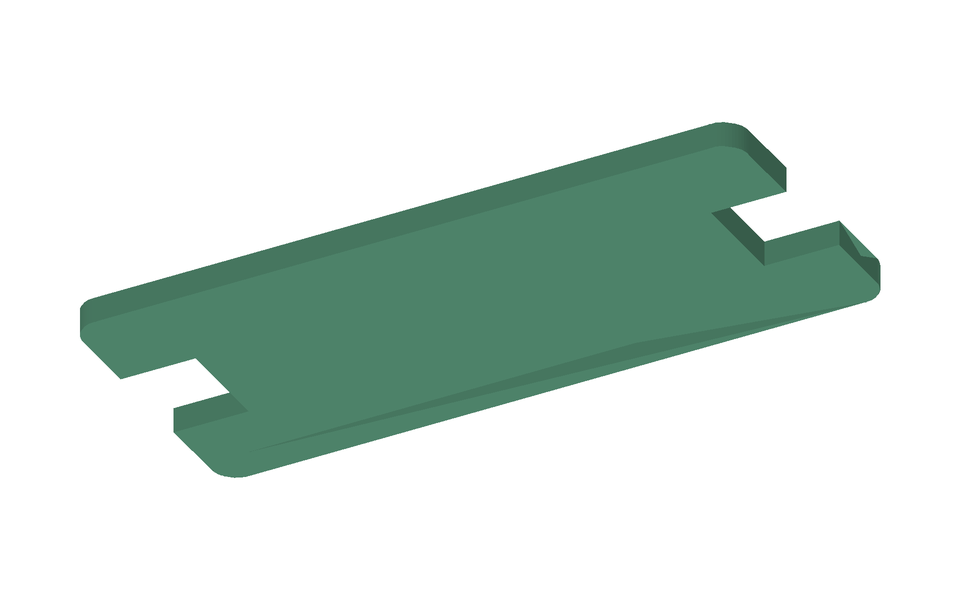
THAKA AI · CC0 · STL + SCAD
USB cable winding card
Low-voltage cable storage; use a loose figure-eight and respect the cable bend radius.
- Verified model dimensions XYZ
- 80 × 35 × 3 mm
- Mesh triangles
- 236
Closed mesh and dimensions checked. Physical printing, strength and field performance remain unverified.
From editable file to your printer
- Measure the real cable, box or accessory. Open the SCAD source and edit its named top parameters in millimetres. Render the complete solid, then export STL.
- In your slicer, select the exact printer, firmware, nozzle and material. Import at 100% in millimetres and confirm XYZ against the file record.
- Place a broad stable face on the bed. A 0.4 mm nozzle and 0.2 mm layer are planning examples only. Use the printer/filament profile for temperatures, walls, infill, speed, cooling and supports.
- Check every layer, overhang and travel move. Generate G-code only for that machine. Print one fit sample before a batch.
- Cool, remove burrs and check dimensions, cracks, flexibility and contact with the real item. Recheck after heat, sun or abrasion; replace damaged prints.
Printer and material
Use an FFF printer with a verified usable volume larger than the part plus brim/edge clearance. PETG can suit many dry accessories; use a supported profile. Prolonged UV/heat needs an appropriate material and, where required, ventilation/enclosure. PLA may deform in hot cars or desert sun.
Use limits
These are organisers and measurement references. Do not use for climbing, anchors, pressurised water, filter membranes, food contact, battery cells, live electrics or hot stove parts. A mesh check does not certify service performance.