 Thaka.Ai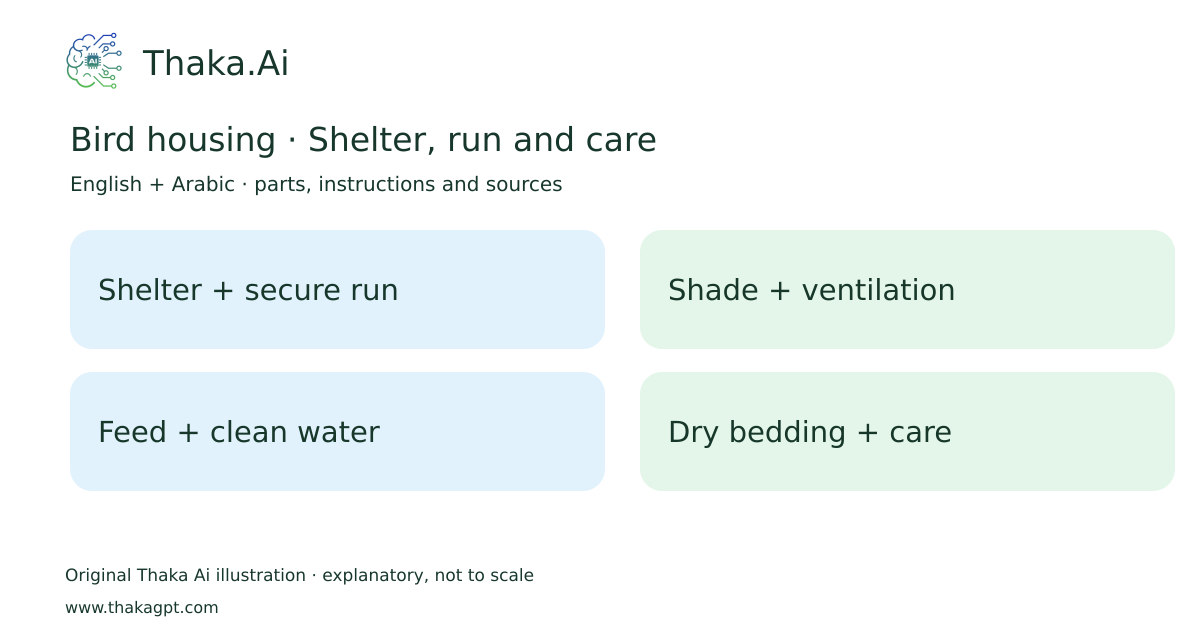
Reviewed 17 October 2026 · schematic not to scale
Plan a predator-resistant chicken shelter and run with dry bedding, shade, ventilation and cleaning access. Ducks, turkeys, quail and pet birds need separate species-specific designs.
- 1Reviewed anchored shelter; example 2 × 1.5 m floor
- 2Protected vents, shade, perches and two nests
- 3Secure run; example 3 × 2 m for six hens
- 4Dry feed, clean water and cleaning access
Site and operating requirements
- Confirm species, number, welfare, climate, predator protection and local keeping rules before building.
Tools and measuring equipment
- Tape, drawing and inspection checklist, protected hand tools, cleaning equipment and a thermometer at bird height.
Output and operating conditions
A measured layout and materials schedule for review before construction, not a load-rated building or a universal cage.
Original six-hen space example: 2 × 1.5 m shelter (3 m²) and 3 × 2 m run (6 m²). Based on extension space guidance; Kuwait heat and wind require local design review.Parts, quantities and dimensions
| Part | Quantity | Specification / dimensions |
|---|---|---|
| Frame, roof and anchoring | site sized | Durable, cleanable materials with no exposed sharp edges, toxic coatings or trapping gaps. Frame sections, joints, foundations and roof fixings require site-specific structural design. |
| Mesh and secure doors | measured area | About 12.7 mm hardware cloth for protected vents; cover openings and use predator-resistant latches. Confirm local predators, mesh gauge and fastening. |
| Perches and nest boxes | 2 nests | Rounded ~50 × 50 mm perch section; allow about 15–25 cm length per hen and 36 cm between perches. Nests ~30–38 cm wide/high and ≥30 cm deep. |
| Feed, water and bedding | 1 set | Species/stage complete feed in a dry pest-proof store, multiple accessible clean water points, absorbent dry bedding and dedicated cleaning tools. |
Preparation and component checks
- Read the complete linked method, mark its edition, and create a measured component list and a labelled sketch before starting. Keep experimental changes separate from the published procedure.
- Prepare the work area and inspect every component. Run the lowest-risk dry or unpowered check before water, heat, moving parts or crop material are introduced.
Procedure
- 1
Confirm local keeping rules, flock species, number, climate, predators and neighbour setbacks. Draw the shelter, run and human cleaning route.
- 2
Review foundations, framing, shade, drainage, roof wind loads and summer heat control with competent local help before buying structural materials.
- 3
Build the reviewed shell and run; secure doors and all mesh edges so birds cannot snag feet or heads.
- 4
Provide high protected ventilation without a sealed hot box. Keep rain and sun off feed and drinking points.
- 5
Install low accessible rounded perches, two nest boxes, dry bedding and clean feeders. Keep feed below perches out of droppings.
- 6
Test doors, predator exclusion, shade movement, water access and temperature at bird height before birds enter.
- 7
Introduce healthy birds under a biosecurity plan. Observe crowding, feather damage, panting and whether every bird can eat and drink.
Safety and inspection
Consult a poultry veterinarian for illness, heat distress and species-specific housing. Mesh, shade and fans do not establish safe summer conditions by themselves.
Verify the result
Floor area is a starting allocation, not a welfare guarantee. Increase space or change management if aggression, heat or wet bedding persists.
Measurement log
- Date, source materials, measured dimensions, inputs, weather/temperature, care, pests/odour, test results and output. Keep batch and location labels.
Maintenance and repeat checks
- Check water, feed, bird behaviour, heat and predator damage daily. Remove wet bedding promptly and collect eggs regularly.
- Clean feeders and drinkers, inspect fasteners weekly and send bedding/manure to the separate managed compost area.
Troubleshooting
- Unexpected decline, pests, odour, poor growth or animal distress
- Pause the affected activity, separate suspect material and check the guide’s moisture, heat, hygiene, drainage and care requirements. Get a qualified diagnosis before treatment or reuse.