 Thaka.Ai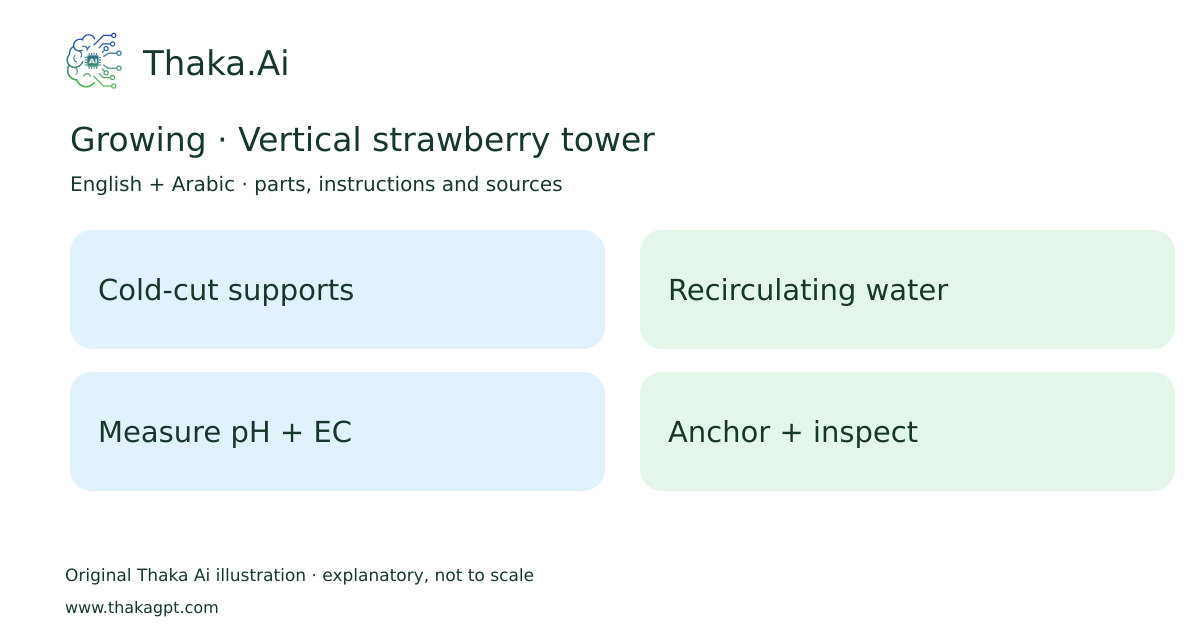
Reviewed 17 October 2026 · schematic not to scale
Use a documented recirculating tower design with cold-cut openings, crop-compatible materials and monitored nutrient solution. The photographed heated PVC pockets are not a verified food-contact design.
- 1Anchored tower, cold-cut supports and net pots
- 2Top water distribution; measure flow at lift
- 3Opaque covered reservoir with clear return path
- 4Calibrated pH/EC checks and dry protected wiring
Site and operating requirements
- Identify crop, season, water quality, soil/medium and local heat. Measure materials before cutting and confirm support and drainage.
Tools and measuring equipment
- Tape, clean hand tools, crop labels, water/soil records and protective equipment for the selected operation.
Output and operating conditions
An irrigated planting tower, not a guaranteed yield. Reservoir volume and pump count must match the complete selected design.
OSU HLA-6724 reference: 5 × 5 in post (~127 × 127 mm), 1.5–1.8 m working height, 3 in net pots. Its shared system uses a 45 US gal (~170 L) reservoir and a 400 gal/h nameplate pump. Do not silently shrink that system.Parts, quantities and dimensions
| Part | Quantity | Specification / dimensions |
|---|---|---|
| Tower and pot supports | per source plan | Source post, 3 in net pots and 3 in support pipe cold-cut at 45° with about 57 mm support height. Manufacturer must confirm suitability for crop/water contact. |
| Reservoir and irrigation | 1 system | Opaque covered reservoir; pump selected from actual flow at tower head, ~12.7 mm ID tubing in source, timer and return path. Nominal pump flow is not delivered flow. |
| Meters, media and nutrients | 1 set | Calibrated pH/EC meters, crop-suitable nutrient product, clean media, strawberry plants and mechanical splash guards instead of melted plastic. |
Preparation and component checks
- Read the complete linked method, mark its edition, and create a measured component list and a labelled sketch before starting. Keep experimental changes separate from the published procedure.
- Prepare the work area and inspect every component. Run the lowest-risk dry or unpowered check before water, heat, moving parts or crop material are introduced.
Procedure
- 1
Read the full OSU plan and draw tower count, reservoir, supports, pipe sizes and return. Confirm all materials and anchoring before cutting.
- 2
Mark staggered pot openings using the actual net pots. Cold-drill/cut, deburr and fit supports; do not melt PVC with a soldering iron.
- 3
Install a stable braced tower, top restraint, opaque lid and plumbing. Keep wiring and plugs outside splash areas with appropriate electrical protection.
- 4
Run clean water without plants; measure delivery at the top, check every pot receives water and ensure unrestricted return without overflow.
- 5
Prepare the selected nutrient solution according to its label. Set nutrient concentration before final pH adjustment and never mix concentrates together.
- 6
Plant strawberries with crowns above the medium and roots supported. Use the source crop targets as a starting reference, not a substitute for local advice.
- 7
Record pH, EC, temperature, reservoir level and pump operation at the same time daily. OSU reference for strawberries: EC 1.8–2.2 mS/cm and pH about 6.
Safety and inspection
Use commercial crop-labelled nutrients and adjustment products as directed. Tall wet towers and outdoor electricity need competent anchoring and electrical review.
Verify the result
Compare real pump flow at lift with the selected plan. Nozzle, nutrient dose and acid/base dose cannot be inferred from a photograph.
Measurement log
- Date, source materials, measured dimensions, inputs, weather/temperature, care, pests/odour, test results and output. Keep batch and location labels.
Maintenance and repeat checks
- Clean filters and emitters, check return flow and shade/temperature, and replace solution according to crop and product guidance.
- Calibrate meters, inspect roots and isolate diseased plants. Prepare a pump-outage response so exposed roots do not dry.
Troubleshooting
- Unexpected decline, pests, odour, poor growth or animal distress
- Pause the affected activity, separate suspect material and check the guide’s moisture, heat, hygiene, drainage and care requirements. Get a qualified diagnosis before treatment or reuse.