 Thaka.Ai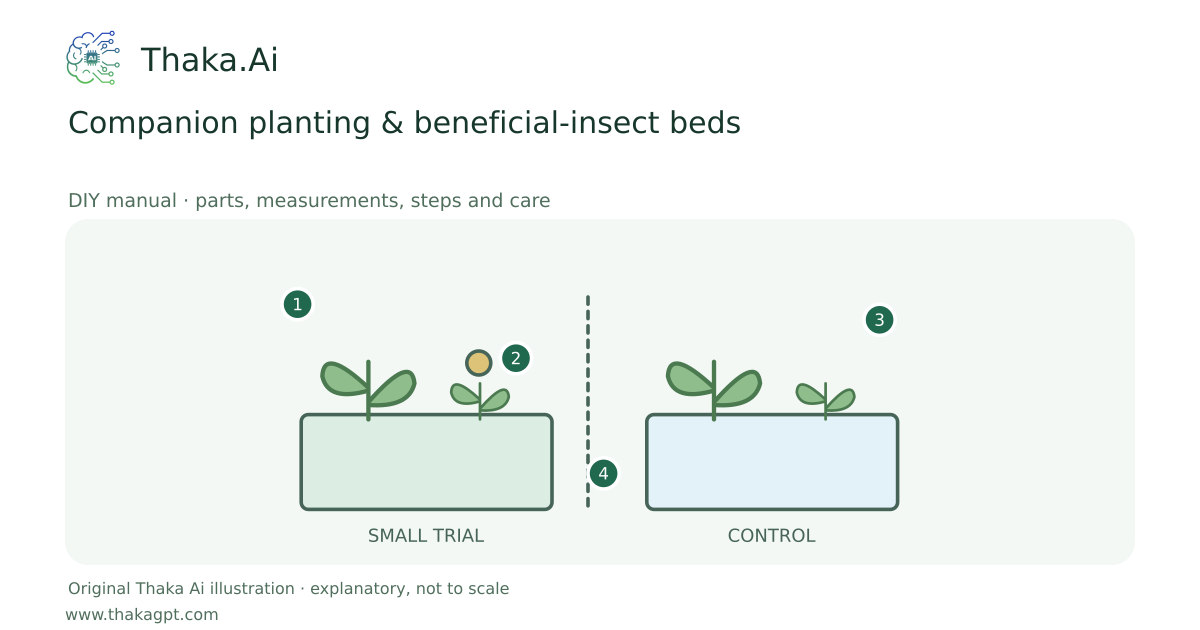
Reviewed 17 October 2026 · schematic not to scale
Organise a small diverse planting trial that fits irrigation, light and space needs. Use companion plants as part of integrated pest management.
- 1Map crop spacing, irrigation and shade needs
- 2Suitable flowering plants for beneficial insects
- 3Compare a small trial with an untreated control
- 4Identify pests; combine with rotation and IPM
Site and operating requirements
- Identify crop, season, water quality, soil/medium and local heat. Measure materials before cutting and confirm support and drainage.
Tools and measuring equipment
- Tape, labels, clean trowel, watering measure, notebook and optional hand lens.
Output and operating conditions
A labelled garden map and a comparison of pest observations, flowering and crop growth. No guaranteed pest repellent effect.
A few marigolds beside tomatoes do not establish nematode control. UF/IFAS describes an identified suitable marigold cultivar as a dense preceding crop for at least two months in the same soil. Sage/carrot and lavender/tomato here are diversity examples, not proven universal pest barriers.Parts, quantities and dimensions
| Part | Quantity | Specification / dimensions |
|---|---|---|
| Crop and locally suitable flowers/herbs | 1 set | Choose healthy identified plants, local seasonal suitability and packet-defined spacing. Match their mature size, sunlight and irrigation needs. |
| Separate plastic planters where needs differ | as needed | Clean draining crop-compatible storage boxes on ground supports. Keep drought-tolerant sage/lavender separate from a frequently irrigated vegetable root zone when needed. |
| Map, labels and pest observation log | 1 set | Ruler/tape, plant labels, phone or hand lens and a notebook; identify both pests and beneficial insects. |
Preparation and component checks
- Identify crop, pest and plant water needs before selecting combinations.
Procedure
- 1
Map a small trial and a comparable control bed. Record sunlight, crop family, final plant spread and access paths.
- 2
Choose flowering species suited to local conditions and beneficial insects. Keep tall plants from shading a sun-demanding crop.
- 3
Plant at each species’ packet spacing, not a single spacing copied from a video. Separate incompatible watering needs into draining plastic boxes.
- 4
Maintain irrigation, mulch and sanitation. Inspect both trial and control weekly for the same pests, damage and flowering stages.
- 5
If nematodes are suspected, identify them through a laboratory or extension adviser before choosing a marigold cultivar or preceding-crop plan. Some cultivars can host other nematodes.
- 6
Record outcomes and adjust next season with crop rotation, barriers and targeted treatment when necessary; do not substitute scent claims for diagnosis.
Ready-to-use checklist
- Plants have compatible space/water/light or separate boxes, and trial/control observations can be compared.
- Resolve any missing critical material, support or operating specification before starting.
Safety and inspection
Identify every plant before keeping it around livestock or pets. Ornamental companion plants are not automatically edible or safe animal feed.
Verify the result
Plants have compatible space/water/light or separate boxes, and trial/control observations can be compared.
Measurement log
- Date, actual dimensions/working volume, product labels, readings, actions and results. Keep before-and-after photographs.
Maintenance and repeat checks
- Remove diseased material appropriately, keep access open and avoid broad sprays that harm beneficial insects. Follow local labelled pest treatments when needed.
- Keep irrigation matched to each planter; inspect root crowding and rearrange plants if mature growth shades or traps neighbours.
Troubleshooting
- Unexpected decline, pests, odour, poor growth or animal distress
- Pause the affected activity, separate suspect material and check the guide’s moisture, heat, hygiene, drainage and care requirements. Get a qualified diagnosis before treatment or reuse.