 Thaka.Ai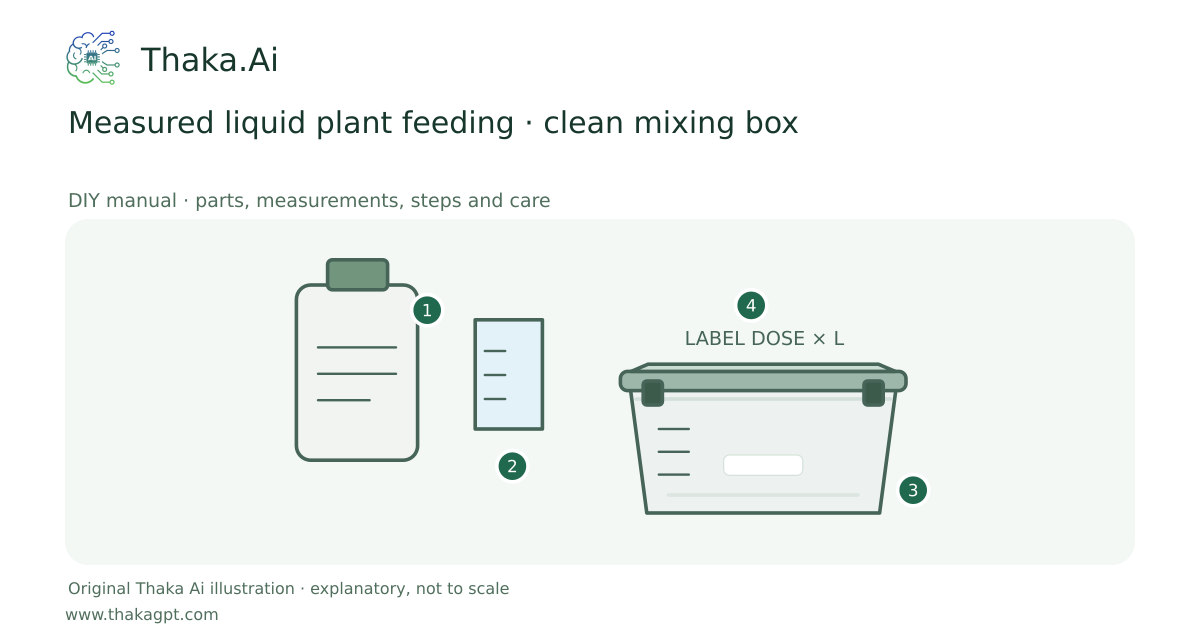
Reviewed 17 October 2026 · schematic not to scale
Make a controlled nutrient solution from a crop-labelled soluble product. Compost plant scraps separately instead of treating an untested ferment as instant fertiliser.
- 1Read the actual crop/product label
- 2Measure clean water to the final volume
- 3Dedicated marked plastic mixing box with lid
- 4Label dose × final litres; apply as directed
Site and operating requirements
- Identify crop, season, water quality, soil/medium and local heat. Measure materials before cutting and confirm support and drainage.
Tools and measuring equipment
- Dedicated millilitre measure/syringe, litre measure, clean stirring tool, marker, gloves and product-label protection. Never reuse food utensils.
Output and operating conditions
A measured label-based plant-feed batch, used only on the intended crop.
Amount = label dose per litre × final litres. Arithmetic example only: a label that actually specifies 2 mL/L would require 10 mL for 5 L. This is not a dose recommendation for every product.Parts, quantities and dimensions
| Part | Quantity | Specification / dimensions |
|---|---|---|
| Clean marked plastic container | 1 | 5–10 L practical batch size; known-history mixing container, fitted storage lid and clear non-drinking label. Never use a former chemical vessel. |
| Water and labelled nutrient | 1 set | Use a product approved for the crop/method and suitable water. Ordinary granular fertiliser is not automatically soluble or suitable. |
| Measuring and application tools | 1 set | Correct scale or dedicated syringe, measuring jug, stirrer, gloves and application tool specified by the product. |
Preparation and component checks
- Read the size notes first. Measure the purchased parts and label every piece before making any cut or hole. Keep access and cleaning space clear.
- Gather the whole shopping list, dry-fit where applicable and keep the complete linked source at hand. Source dimensions and original sizing examples are identified separately.
Procedure
- 1
Confirm crop/medium needs from a soil test or hydroponic recipe and choose the correct labelled product.
- 2
Clean the container and label it “Plant nutrient solution — Not drinking water”. Keep it separate from animal feed and household drinking equipment.
- 3
Read the actual label dose and final-volume instructions. Calculate and record the needed amount before opening the product.
- 4
Measure water and product with dedicated tools, mix in the label’s order and bring to the specified final volume. Never mix incompatible concentrates.
- 5
Apply by the stated root/foliar method, timing and crop restrictions; do not pour concentrate beside a trunk or onto roots.
- 6
Record the batch, application and plant response, then rinse equipment and manage leftovers by the label.
Ready-to-use checklist
- Product, dilution, final volume, crop use and application rate all match the actual label, and the container is unmistakably non-drinking.
- All edges, supports, drainage and access have been checked. Unknown critical specifications have been resolved before use.
Safety and inspection
Use the specified materials and complete source method. Ask a competent local specialist where site loads, electricity, water safety or unfamiliar tools are involved.
Verify the result
Product, dilution, final volume, crop use and application rate all match the actual label, and the container is unmistakably non-drinking.
Measurement log
- Date, actual dimensions, material/product labels, water/soil readings, actions, problems and results. Photograph the setup before use and after any change.
Maintenance and repeat checks
- Recheck product expiry, storage and measurements for each batch; store only where and for as long as the label permits.
- Worm drainage and rotting-scrap liquid have unverified nutrients and can contain pathogens or phytotoxic compounds. Do not apply them to edible plant parts.
Troubleshooting
- Unexpected decline, pests, odour, poor growth or animal distress
- Pause the affected activity, separate suspect material and check the guide’s moisture, heat, hygiene, drainage and care requirements. Get a qualified diagnosis before treatment or reuse.