 Thaka.Ai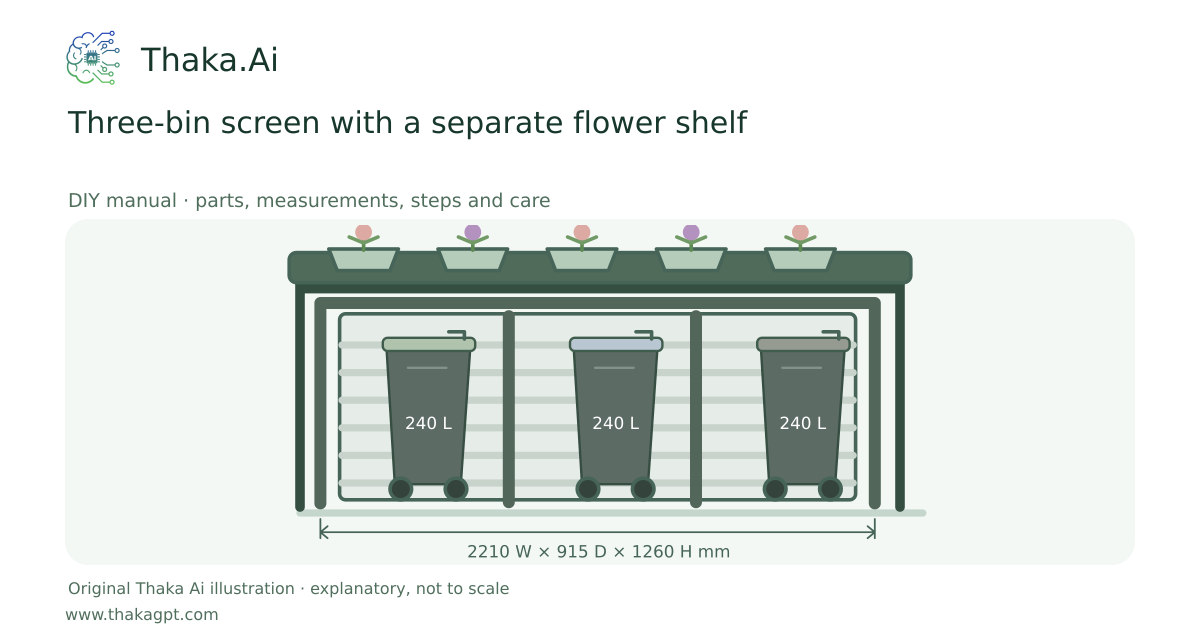
Reviewed 17 October 2026 · schematic not to scale
Create a clean modern screen for exactly three full-size wheelie bins. A separate fixed load-rated flower shelf sits above; it must not load bin lids or a hinged cover.
- 1Exactly three full-size 240 L bin examples
- 2Clean modern ventilated screen; three accessible bays
- 3Independent fixed flower shelf with verified wet-load rating
- 4Measure actual bins and leave pull-out/lid clearance
Site and operating requirements
- Identify crop, season, water quality, soil/medium and local heat. Measure materials before cutting and confirm support and drainage.
Tools and measuring equipment
- Tape, level, square, clamps, saw, drill/driver and the complete construction plan’s bits/fixings; eye, hearing and dust protection. A qualified installer specifies the separate shelf and anchors.
Output and operating conditions
A ventilated modern three-bin screen and independently supported flower display.
Bunnings publishes a 2210 W × 915 D × 1260 H mm three-bin screen. SULO Citybac 240 L standard-lid example: about 583 W × 734 D × 1068 H mm. Measure YOUR bins; the source screen is not certified for a planted roof.Parts, quantities and dimensions
| Part | Quantity | Specification / dimensions |
|---|---|---|
| Real full-size wheelie bins | 3 | Keep all three removable independently. Record width across wheels, handles/depth, closed height, open-lid height and pull-out space. |
| Outdoor screen frame and slatted panels | per source plan | Use the complete linked construction plan for cuts and fixings. Its benchmark is a ventilated three-door screen, not a flower-loaded roof structure. |
| Independent fixed flower shelf | 1 | Designer/supplier must specify supports, anchoring and rated saturated load of planters, soil, retained water and wind. Keep its legs outside bin travel. |
| Removable flower planters and drainage | as measured | Lightweight clean planters, compatible liners/drains and locally suitable non-food ornamentals; drain away from doors and timber. |
| Hardware and finish | 1 set | Exterior-rated hinges, stays/latches, corrosion-resistant fixings and a cured pale/charcoal exterior finish. Confirm fastener sizes from the current plan before cutting. |
Preparation and component checks
- Read the size notes first. Measure the purchased parts and label every piece before making any cut or hole. Keep access and cleaning space clear.
- Gather the whole shopping list, dry-fit where applicable and keep the complete linked source at hand. Source dimensions and original sizing examples are identified separately.
Procedure
- 1
Measure each of the three bins and chalk the footprint. Roll each through the planned doorway before committing to the screen size.
- 2
Download the complete source frame/door plan and check all cuts and hardware. Its fastener references vary, so resolve those details with the supplier/carpenter rather than choosing by guesswork.
- 3
Use a level durable base with clear rolling paths and drainage. Do not add a floor lip that blocks bin wheels.
- 4
Assemble the reviewed screen square and fit ventilated cladding and three accessible doors. Sand edges and allow exterior coatings to cure.
- 5
Install the fixed flower-shelf support independently to its rated design. Do not screw a soil-filled tray to the screen’s movable lid.
- 6
Place removable planters, test drainage with water and confirm the saturated load remains within the shelf rating.
- 7
Test each bin rolling out separately, its lid opening in the intended position, door stays and cleaning access. Keep bin lids closed when stored.
Ready-to-use checklist
- Exactly three bins fit, each moves independently, access is unobstructed and the separate shelf has a verified wet-load rating.
- All edges, supports, drainage and access have been checked. Unknown critical specifications have been resolved before use.
Safety and inspection
The overhead flower shelf needs professional load and anchorage review before construction. The source bin screen has no verified planted-roof load rating; do not add wet soil to its hinged lid.
Verify the result
Exactly three bins fit, each moves independently, access is unobstructed and the separate shelf has a verified wet-load rating.
Measurement log
- Date, actual dimensions, material/product labels, water/soil readings, actions, problems and results. Photograph the setup before use and after any change.
Maintenance and repeat checks
- Clean spills and bin lids, inspect hinges/latches/anchors and keep ventilation gaps open.
- Check planter drains and shelf supports after watering/wind. Never stand or sit on the shelf or enclosure.
Troubleshooting
- Unexpected decline, pests, odour, poor growth or animal distress
- Pause the affected activity, separate suspect material and check the guide’s moisture, heat, hygiene, drainage and care requirements. Get a qualified diagnosis before treatment or reuse.