 Thaka.Ai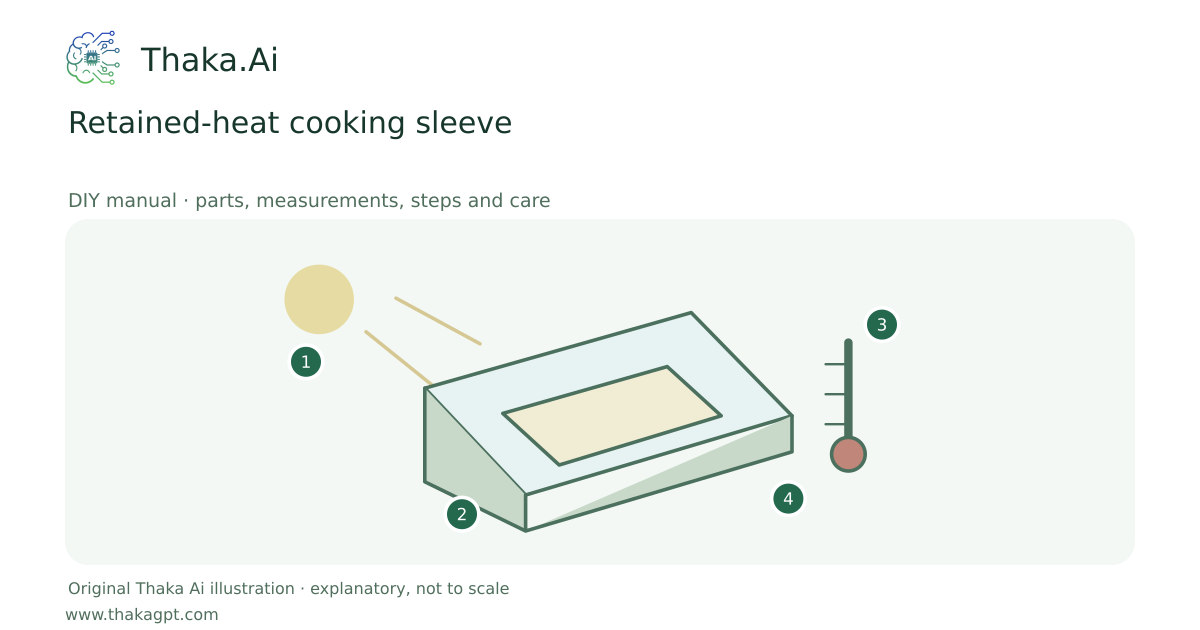
Reviewed 17 October 2026 · schematic not to scale
A heat-safe insulated sleeve reduces heat loss from a covered pot after active heating. Start with a hot-water retention test before using a validated food process.
- 1Measured sunlight or other heat input
- 2Purpose-suitable collector or insulated vessel
- 3Temperature, time and handling checks
- 4Measured useful heat; source-specific limits
Site and operating requirements
- Measure heat demand and site exposure. Separate an educational solar-heating experiment from a pressurised domestic hot-water installation.
- Check materials, temperature limits, stability and burn protection before introducing heat.
Tools and measuring equipment
- Tape measure, thermometer and heat gloves
Output and operating conditions
No universal fuel-saving percentage or completion time is promised. Record how long the actual filled pot stays above the required process temperature.
Retained-heat cooking is a long-established published method. Insulation thickness and recipes require measurement rather than copying unsupported timings.Parts, quantities and dimensions
| Part | Quantity | Specification / dimensions |
|---|---|---|
| Lidded cooking pot | 1 | Heat-safe pot with handles that can be lifted securely. |
| Heat-safe insulated sleeve | 1 | Dry insulation rated for contact conditions, tightly fitted to the pot. |
| Heat-resistant base and thermometer | 1 each | Protects the surface and measures retained temperature. |
Preparation and component checks
- Select heat-rated insulation, not ordinary plastic.
- Choose a measurable safe food process before cooking.
Procedure
- 1
Measure the covered pot and choose heat-safe insulation.
- 2
Fit the sleeve closely without obstructing safe handling.
- 3
Place the assembly on a dry heat-resistant stable base.
- 4
Heat a measured water batch using a separate stove outdoors.
- 5
Transfer the covered pot and log its cooling curve.
- 6
Use food only with a validated process that the measured performance can satisfy.
Ready-to-use checklist
- Sleeve is dry and away from flame.
- Process temperatures can be measured.
Safety and inspection
Keep the sleeve far from flame. Do not place hot pots into ordinary plastic boxes or use this as a generic dried-bean or raw-meat recipe.
Verify the result
Measure the center temperature over time using the actual pot, fill and insulation; verify the chosen recipe independently.
Measurement log
- Water volume and cooling curve
- Pot and sleeve dimensions
Maintenance and repeat checks
- Dry insulation fully after spills or condensation.
- Discard scorched or heat-damaged material and keep the sleeve away from burners.
Troubleshooting
- No output, abnormal heat, noise, vibration or leaks
- Stop and isolate first. Check the documented input, load compatibility, alignment and connections; keep guards fitted and refer specialist systems to their installer.