 Thaka.Ai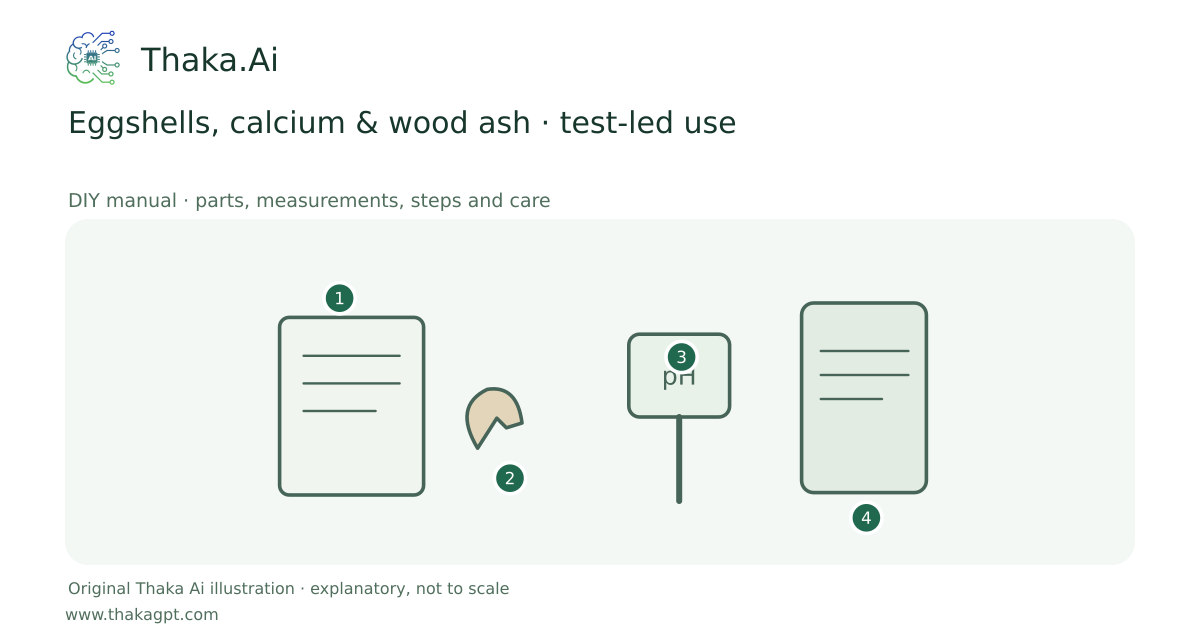
Reviewed 17 October 2026 · schematic not to scale
Assess the calcium and wood-ash references using soil and crop evidence. Choose a measured amendment only when the site actually needs it.
- 1Representative soil pH and nutrient test
- 2Eggshells: slow amendment, no instant calcium cure
- 3Clean wood ash only if the soil recommendation calls for it
- 4Labelled, measured amendment; keep a treatment record
Site and operating requirements
- Identify crop, season, water quality, soil/medium and local heat. Measure materials before cutting and confirm support and drainage.
Tools and measuring equipment
- Clean sampling tools/bag as the lab specifies, tape, scale and product-required protective equipment.
Output and operating conditions
A soil-test-led amendment decision and care log, including a clear “do not apply” option.
Eggshells break down too slowly to correct current-season blossom-end rot. No validated crop-specific concentration/dilution for eggshell + lemon water is supplied. Wood ash raises pH: Iowa State advises no ash when soil pH exceeds 7.Parts, quantities and dimensions
| Part | Quantity | Specification / dimensions |
|---|---|---|
| Representative soil analysis and crop diagnosis | 1 set | Ask a local lab for sampling instructions, pH, relevant nutrients and salinity where appropriate. Identify irrigation/root problems before assuming calcium deficiency. |
| Clean eggshells for compost | as needed | Rinse, dry and crush for the compost route; keep raw egg residue away from food/animal-feed surfaces. Shells are not an instant or complete fertiliser. |
| Lab-recommended labelled amendment | as measured | Use the actual product’s rate for the measured area. If clean wood ash is specifically recommended, use only fully cooled ash from untreated unpainted wood; exclude coal, briquettes and rubbish. |
Preparation and component checks
- Do not combine untested household liquids. Confirm pH and crop need before buying an amendment.
Procedure
- 1
Collect the representative sample using the laboratory’s instructions and record crop, water source, previous additions and symptoms.
- 2
Check irrigation consistency, drainage and roots. Blossom-end rot can involve water-related calcium transport; do not pour an acidic homemade shell mixture onto roots as a cure.
- 3
Route rinsed dried crushed shells to managed compost. Allow compost to mature; do not expect immediate soluble calcium.
- 4
Read the soil report. If pH is above 7 or no liming/potassium need is established, do not add ash. Avoid ash near acid-loving plants.
- 5
When an amendment is actually prescribed, measure the area and calculate product amount from its label and laboratory recommendation. Keep an untreated comparison area where practical.
- 6
Apply only in suitable conditions using the required protection. Never mix wood ash with fertiliser; record the date, amount and follow-up test plan.
Ready-to-use checklist
- The soil report supports the chosen material/rate, or the decision is to apply none; irrigation and crop response are recorded.
- Resolve any missing critical material, support or operating specification before starting.
Safety and inspection
Seek agronomy advice before changing pH or treating persistent crop symptoms. Homemade mixtures have unknown concentration; no universal dilution is provided.
Verify the result
The soil report supports the chosen material/rate, or the decision is to apply none; irrigation and crop response are recorded.
Measurement log
- Date, actual dimensions/working volume, product labels, readings, actions and results. Keep before-and-after photographs.
Maintenance and repeat checks
- Continue even irrigation, monitor leaves/fruit and follow the laboratory’s retesting interval. Do not repeat additions automatically.
- Keep amendment products sealed and labelled in their original packaging. Handle cooled ash with gloves, eye and dust protection; do not show or store hot ash in a plastic box.
Troubleshooting
- Unexpected decline, pests, odour, poor growth or animal distress
- Pause the affected activity, separate suspect material and check the guide’s moisture, heat, hygiene, drainage and care requirements. Get a qualified diagnosis before treatment or reuse.