 Thaka.Ai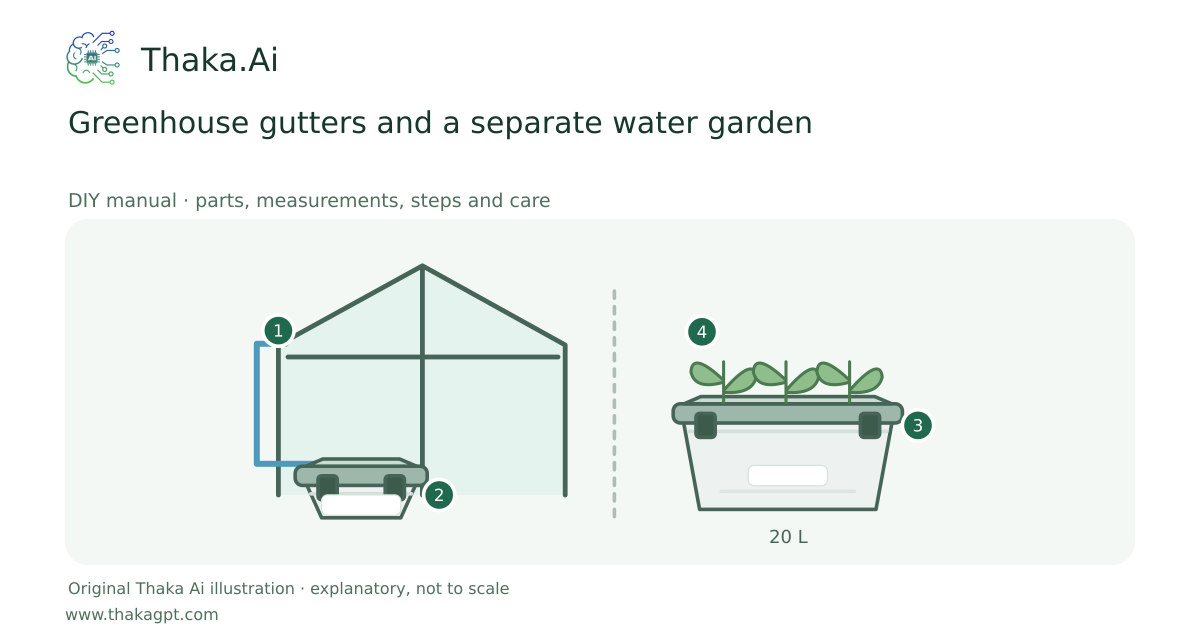
Reviewed 17 October 2026 · schematic not to scale
Harvest greenhouse roof runoff outside, and use a separate clean hydroponic reservoir for an edible-crop pilot.
- 1Greenhouse gutter collects roof runoff outside
- 2Independent screened rainwater tank
- 3Separate clean plastic growing box and fitted lid
- 4Documented nutrient, oxygen and water testing
Site and operating requirements
- Identify crop, season, water quality, soil/medium and local heat. Measure materials before cutting and confirm support and drainage.
Tools and measuring equipment
- Tape, marker, suitable cold hole saw matching actual net pots, deburring tool, gloves, pH/EC meters and clean water measure.
Output and operating conditions
Separate roof collection and a small monitored growing-box pilot.
Catchment volume uses horizontal roof projection. A small original 20 L opaque storage-box growing pilot can use crop-compatible net pots in a removable lid; it is not the video’s unverified NFT channel design.Parts, quantities and dimensions
| Part | Quantity | Specification / dimensions |
|---|---|---|
| Exterior collection components | 1 set | Gutter brackets suited to the greenhouse, downpipe, screened/first-flush collection tank and independent overflow. Do not drill structural glazing blindly. |
| Clean opaque plastic growing box | 1 | Original compact example ~20 L; choose material approved for crop/water contact and a supported removable lid. Actual dimensions come from the purchased box. |
| Growing equipment | 1 set | Suitable net pots/media, crop-labelled nutrient, clean water and pH/EC checks. Add aeration/recirculation only as specified by the selected hydroponic method. |
Preparation and component checks
- Read the size notes first. Measure the purchased parts and label every piece before making any cut or hole. Keep access and cleaning space clear.
- Gather the whole shopping list, dry-fit where applicable and keep the complete linked source at hand. Source dimensions and original sizing examples are identified separately.
Procedure
- 1
Check greenhouse condition and approved attachment points; map external rainwater routes and a separate clean growing area.
- 2
Fit gutters/downpipes by the manufacturer and connect to the roof-rainwater guide’s protected tank.
- 3
Select one documented hydroponic method and compatible crop. Do not feed an edible channel directly from roof gutters.
- 4
Measure actual net pots on the empty lid, mark enough room for plants and supports, cold-cut/deburr the holes and test pot retention.
- 5
Prepare nutrient solution with clean suitable water following the label; support plants at the correct crown/root position for the method.
- 6
Record solution level, pH/EC, temperature and roots; provide oxygen and solution renewal according to the selected method.
Ready-to-use checklist
- Rainwater plumbing is separate, the lid/pots are secure and the chosen growing method has a complete water/nutrient/oxygen plan.
- All edges, supports, drainage and access have been checked. Unknown critical specifications have been resolved before use.
Safety and inspection
Use the specified materials and complete source method. Ask a competent local specialist where site loads, electricity, water safety or unfamiliar tools are involved.
Verify the result
Rainwater plumbing is separate, the lid/pots are secure and the chosen growing method has a complete water/nutrient/oxygen plan.
Measurement log
- Date, actual dimensions, material/product labels, water/soil readings, actions, problems and results. Photograph the setup before use and after any change.
Maintenance and repeat checks
- Keep roof debris and runoff out of the growing reservoir. Clean surfaces and inspect roots/flow after each batch.
- Use the strawberry-tower or aquaponics guide for those specific systems rather than mixing their flow and stocking rules.
Troubleshooting
- Unexpected decline, pests, odour, poor growth or animal distress
- Pause the affected activity, separate suspect material and check the guide’s moisture, heat, hygiene, drainage and care requirements. Get a qualified diagnosis before treatment or reuse.